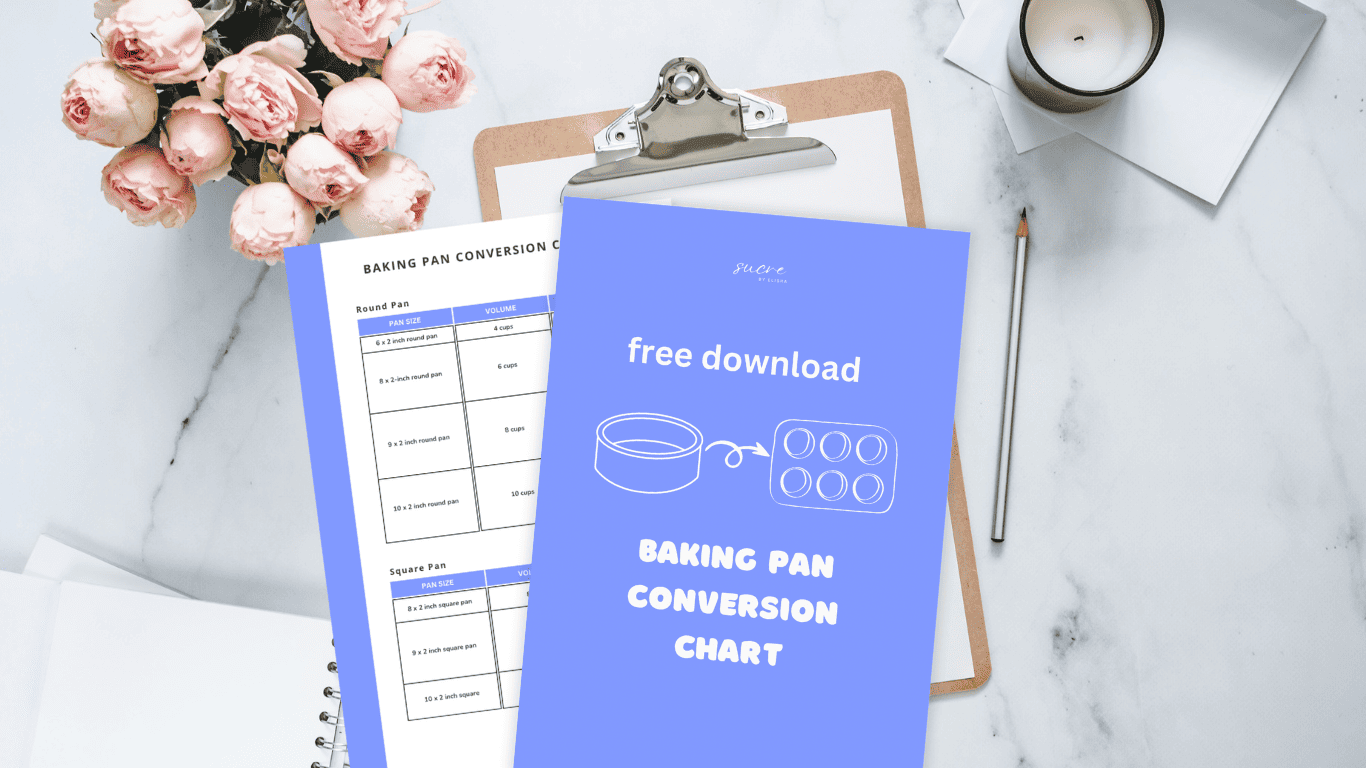
Got a recipe asking for an 8-inch cake pan but all you’ve got is a 6-inch? No worries! We’ve got your back on how to switch between pan sizes with The Baking Chart That Helps You Convert Between Pan Sizes. With a bit of math and a sprinkle of adjustments, you’ll be swapping sizes and shapes like a pro using our handy chart and tips.

Download the Baking Pan Conversion Chart HERE
How to tweak your cake batter for various pan sizes?
1. Keep the batter depth consistent.
Let’s talk batter depth—it’s key to nailing that perfect cake! Pouring in too much can lead to a sinking center or a gooey mess, while too little leaves you with a sad, dry slice. Aim to fill your pan halfway to two-thirds full. And hey, if you’ve got extra batter, whip up some muffins or a mini cake!
2. Alternatively, tweak your baking time and temperature.
If your batter’s looking deep in a smaller pan, opt for a gentle bake—lower the oven temp by 25°F and give it some extra time. For larger pans, crank up the heat by 25°F and shorten the bake time (you’ll still end up with a thinner cake, but the taste and texture should be fine). Keep an eye out for texture changes and always test with a cake tester to ensure it’s cooked through.
Introducing The Baking Pan Conversion Chart

Learn to adjust your batter to fit any cake pan size like a seasoned pro!
This Baking Pan Conversion Chart is your ultimate tool for hassle-free pan size swaps! Say goodbye to guesswork and hello to precision baking. With our handy chart, you’ll effortlessly match pan sizes, ensuring your creations come out perfectly every time. Just remember, when switching pans, aim for a batter volume slightly lower than the specified pan volume for optimal results.
When to NOT swap baking pans
Know when to stick to the original plan: some batters are best left in their specialty pans.
1. Bundt cakes thrive in their iconic molds, thanks to their dense, sweet nature.
2. Angel food cakes fare well in tube pans, where the center hole aids in even baking.
3. Cheesecakes rely on the support of tall, springform pan sides for that perfect slice.
Keep the integrity of these specialty batters intact for bakery-worthy results!
In conclusion, mastering the art of switching between baking pan sizes opens up a world of possibilities in the kitchen. By keeping batter depth consistent and adjusting baking time and temperature accordingly, you can achieve perfect results every time. And with the Baking Pan Conversion Chart at your fingertips, the guesswork is eliminated, making precision baking a breeze. Remember, while versatility is key, there are times when specialty pans are irreplaceable. So, embrace the nuances of each recipe and let your creations shine, whether in classic molds or custom shapes. Happy baking!
Want to learn more?
- Kitchen Measurement Conversion Chart
- Baking Time And Temperatures For Different Pan Sizes
- Baking Powder vs Baking Soda
- How To Properly Measure Baking Ingredients
This post may contain affiliate links. Read our disclosure policy for more details.


Leave a Reply